




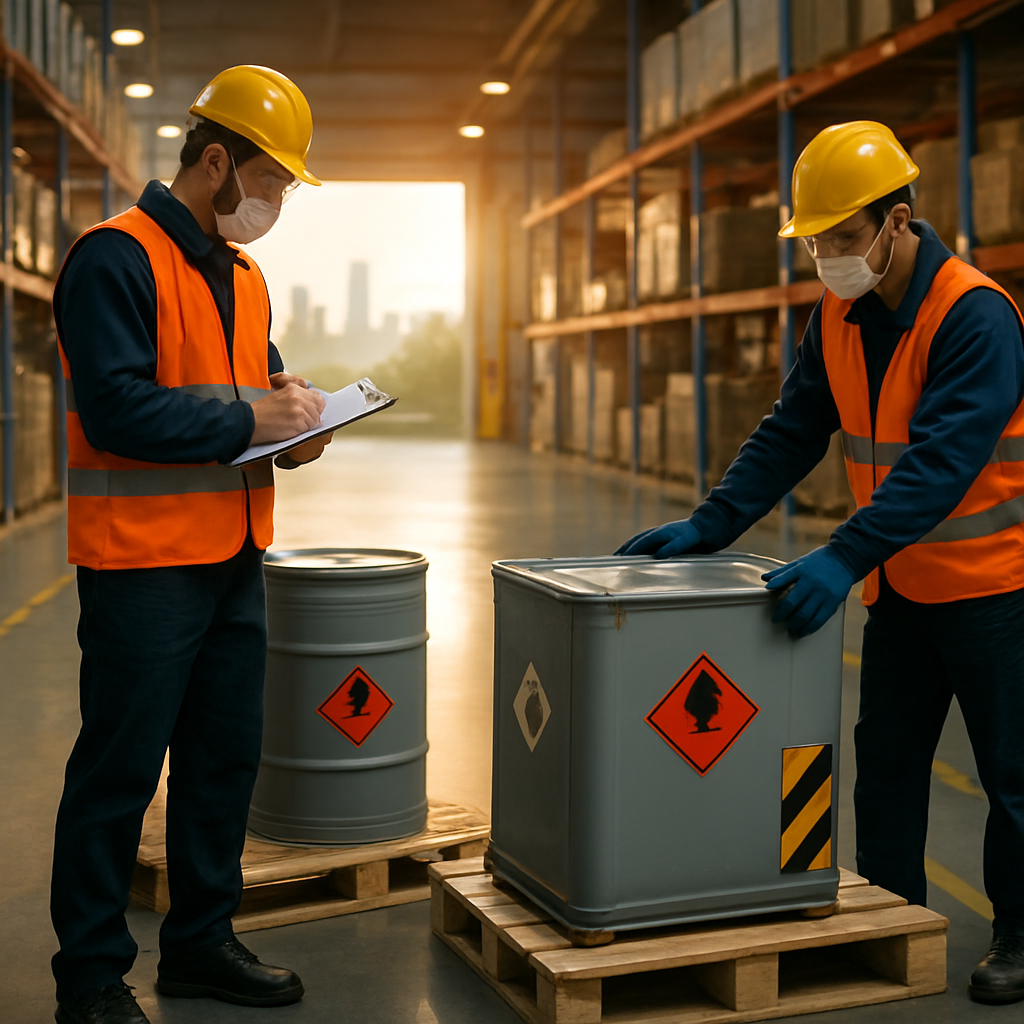
Essential Compliance for Dangerous Goods Freight Forwarding
Dangerous goods freight forwarding in Australia is under growing pressure as volumes of chemicals, batteries and other hazardous products increase. Many operators still depend on manual paperwork, legacy processes and informal advice, leaving critical gaps between what the law requires and what happens on the ground. This compliance gap exposes Australian shippers to escalating risks, from rejected consignments to serious incidents involving Hazardous Goods in Australia.
- Missing or outdated Safety Data Sheets for hazardous products
- Untrained staff signing dangerous goods declarations
- Packaging chosen on cost rather than performance standards
- Assuming road, sea and air share identical compliance rules
- Incident procedures that exist on paper but are never tested
Understanding the Compliance Gap in Dangerous Goods Freight Forwarding
For many freight forwarders and manufacturers, the rules around dangerous materials handling feel complex and fragmented. Documentation might be handled by one team, while packaging and labelling decisions sit elsewhere, with little coordination. As supply chains speed up, shortcuts become tempting, especially when clients push for cheaper rates and faster turnarounds. This is how small inconsistencies in paperwork or classification grow into systemic weaknesses.
Why Dangerous Goods Freight Forwarding Compliance Matters
Non-compliance is not just a paperwork problem; it is a direct threat to safety, business continuity and brand reputation. Regulators look closely at classification accuracy, chemical transport safety rules, packaging integrity and staff competency when incidents occur. A single container stopped at a port or an airfreight consignment refused under IATA rules can trigger costly delays and investigations. For exporters, repeated compliance failures can jeopardise contracts and market access.
Common Warning Signs Your DG Processes Are Exposed
Early indicators often appear in everyday operations. SDS documents may not match current dangerous goods handling standards, or staff rely on overseas templates that ignore australian chemical shipping laws. Different modes might be treated as interchangeable, even though shipping regulations for chemicals vary sharply between road, rail, sea and air. If incident drills are rarely run, it is unlikely that transport safety procedures for DG will hold up under real pressure.
Misconceptions and Hidden Risks in DG Management
Several myths keep risk hidden. Some operators believe that small quantities or “limited quantities” sit outside regulatory requirements for hazmat, when exemptions are actually narrow and conditional. Others assume that if a carton carries a hazard label, it must be compliant end-to-end. In practice, regulators expect evidence of safe handling of hazardous chemicals, segregation planning and dangerous cargo transport best practices across warehouses, vehicles and depots.
The Australian Dangerous Goods Code, maintained by the National Transport Commission, provides the core chemical freight compliance guidelines for road and rail and should be a primary reference point for any business moving dangerous goods in Australia (https://www.ntc.gov.au/codes-and-guidelines/australian-dangerous-goods-code). If audits repeatedly uncover errors, or if your team is unsure how safety protocols for transport apply to specific consignments, it is a signal to review your framework before a serious incident occurs. Now is the time to scrutinise your systems, seek expert guidance and ensure your dangerous goods freight forwarding is robust enough to protect people, assets and your licence to operate.

Related posts
The Role of Technology in Hazardous Goods Transportation
The transportation of hazardous goods is a complex and risky business that requi
The Cost of Non-Compliance in Hazardous Goods Transportation: Lessons Learned
Transportation of hazardous goods is a critical part of the modern economy, from

Hazardous Goods Transportation by Air, Sea, and Land: A Comparative Analysis
When it comes to transporting hazardous goods, safety should always be the top p
