




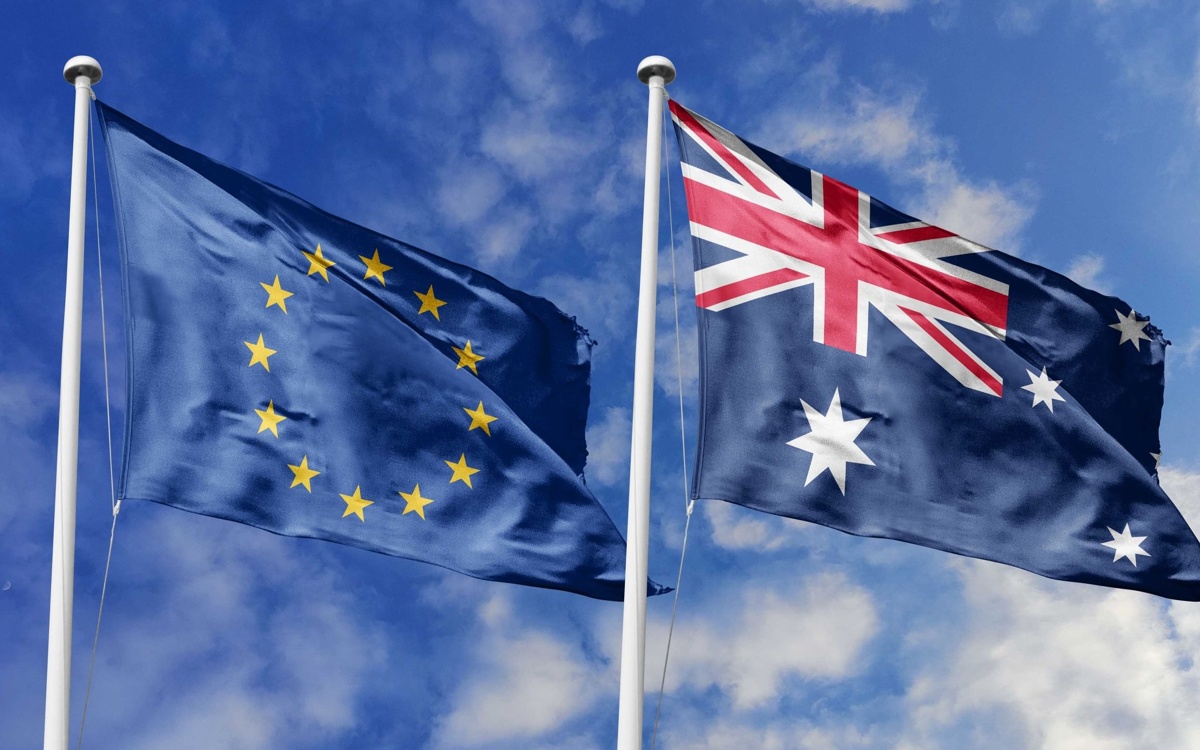
Australia and EU Officially Sign Off on New Agreement
Australia and the European Union (EU) have now concluded negotiations for an Australia-EU Free Trade Agreement (A-EU FTA), a comprehensive, progressive and commercially meaningful free trade agreement.
This landmark deal will further strengthen Australia’s economic and strategic partnership with the EU, unlocking a massive, high-income market of around 450 million consumers with a GDP of about $30 trillion.
Once fully implemented, 98% of the current value of Australia’s goods exports will enter the EU duty-free, delivering new market opportunities for many key Australian industries.
Goods
Once fully implemented, 94.8% of the value of Australia’s agricultural exports will enter the EU duty-free. Tariffs will be eliminated on:
- Wine, tree nuts, barley, seafood, onions, carrots, honey, olive oil.
For key agricultural products where tariffs are not eliminated, the A-EU FTA will create annual tariff rate QUOTAS, including on:
- most dairy products including cheese
- beef, sheep meat, natural butter, skimmed milk powder, high protein whey.
- milled/semi-milled rice, sugar wheat, gluten, ethanol
- natural butter, skimmed milk powder, high protein whey.
Industry
On full implementation, all tariffs on Australia’s advanced manufacturing and other industrial goods (except steel) will be eliminated, including:
- machinery and electrical goods, auto parts
- textiles, wood and plywood, chemical and pharmaceutical
- aluminium, zinc, lead and silicon, plastics and rubber products
- optical and photographic or cinematographic products
- toy games and sports-related products.
All tariffs will also be eliminated on Australian energy and resource products, including critical minerals, lithium hydroxide, and hydrogen and its carriers.
The agreement will allow extended travel and movement for Australians within the EU, and offers better access for Australian institutions, suppliers to world-leading European researchers, engineers and technicians, recognitions of qualifications & access to EU Government contacts, mining, manufacturing, energy, tourism and education.
Benefit will not flow through until agreement is enters into force which could take between 18-24 months to final.

Related posts

Eco-friendly VLCC – A World First
In September China received the first delivery today from an eco-friendly VLCC,

Supply Chain Optimization in the Digital Era: Harnessing Data and Analytics
In the digital era, businesses are inundated with vast amounts of data generated
Seasonal Measures: Brown Marmorated Stink Bug (BMSB)
Seasonal Measures: Brown Marmorated Stink Bug (BMSB) It is important
