




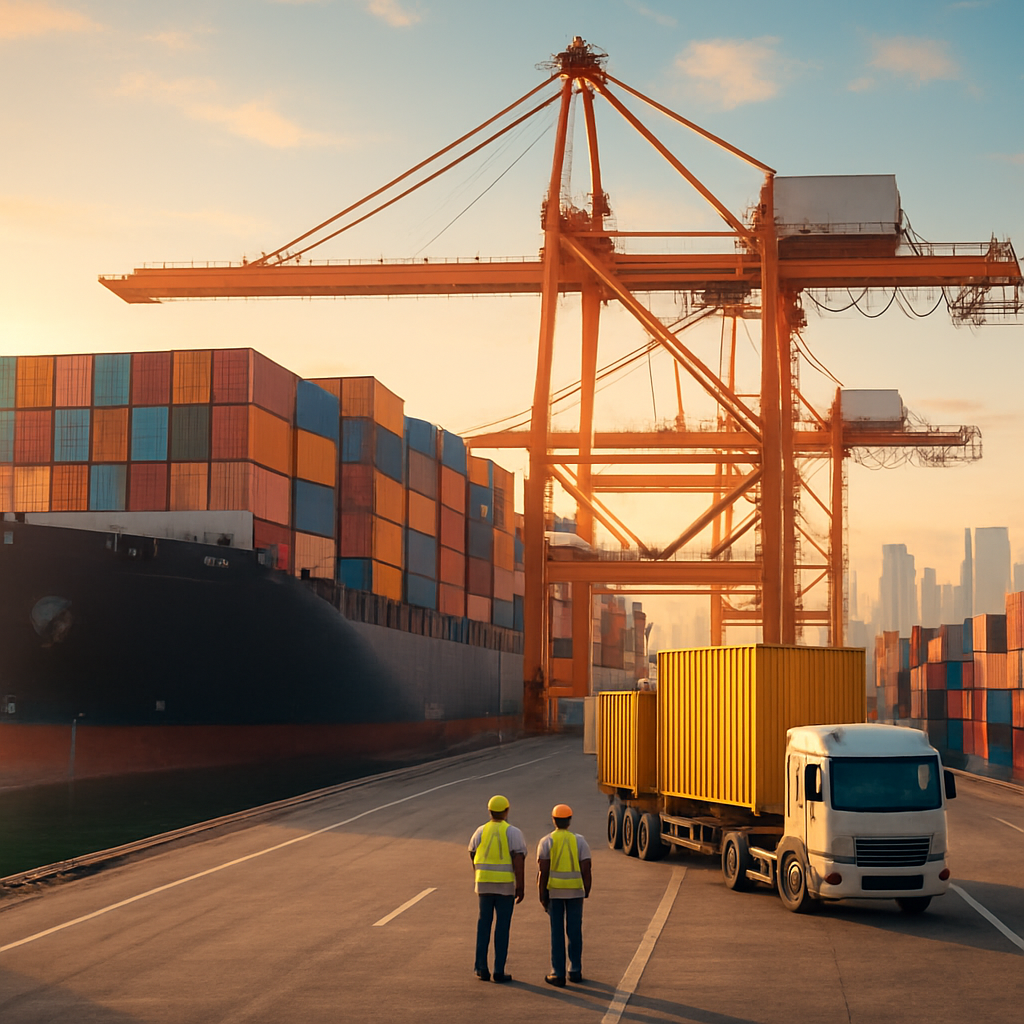
June 2026 Ocean Freight Rate Trends: What to Expect
June 2026 ocean freight rate trends are reshaping shipping budgets for many Australian importers and exporters. Spot container rates on major trade lanes have risen sharply since March, driven by tightening capacity and stronger pre-peak demand. For businesses, this means higher landed costs, less predictable transit times, and greater urgency to secure space early. Understanding what is driving these changes, and how to respond, is essential for resilient supply chains and more accurate financial planning.
Understanding June 2026 ocean freight rate trends
Rate indices such as Drewry’s World Container Index and the Shanghai Containerized Freight Index are reporting week‑on‑week increases across several corridors. Carriers are deploying blank sailings and adjusting schedules, which reduces available capacity and pushes up prices for Sea Freight in Australia. At the same time, some exporters are front‑loading orders ahead of expected surcharges and seasonal peaks. These combined pressures are particularly significant for time‑sensitive industries, including retail, fast‑moving consumer goods, and automotive parts.
Key drivers behind June 2026 ocean freight rate trends
Several structural and short‑term factors underpin current June 2026 ocean freight rate trends. Geopolitical risks in areas such as the Red Sea are lengthening routes, increasing transit times and bunker fuel costs, and complicating Ocean shipping logistics. Insurance premiums have also risen on some corridors, flowing directly into all‑in freight rates. In parallel, schedule reliability remains below pre‑pandemic norms, with congestion and transhipment delays still evident at some regional hubs serving Australia.
What Australian shippers should expect next
Over the coming months, shippers should be prepared for more frequent general rate increases and peak season surcharges, often with shorter validity periods. Businesses relying on Container shipping options will likely face tighter booking windows and stricter equipment controls. Planning should assume potential disruption from port congestion, industrial action, or weather events. Australian sea freight logistics planning that factors in flexible routings, alternate ports, and adjusted safety stock levels can help cushion these uncertainties.
Practical strategies to manage rising ocean freight costs
A structured approach to June 2026 ocean freight rate trends can reduce both risk and cost. First, extend booking lead times to three to five weeks where possible, allowing more scope for cost‑effective container freight choices. Second, review container type selection for exports to optimise cube and weight, minimising wasted space. Third, map the full Customs documentation process, including customs paperwork for sea freight and import clearance requirements Australia, to avoid delays and storage penalties at destination ports.
It is also useful to balance spot bookings with short‑ to medium‑term agreements to spread exposure to volatility. Businesses engaged in international ocean shipping from Australia may benefit from door-to-door container delivery services when inland transport and waiting time are considered together. Improved tracking visibility for ocean cargo, combined with clear milestones, supports accurate inventory planning and customer communication. For an overview of how global trade flows are influencing rates, the market commentary on the International Maritime Organization website at https://www.imo.org can be a valuable reference.
Many shippers ask whether current June 2026 ocean freight rate trends are temporary or the “new normal”. While some easing may occur if additional capacity is deployed, most analysts expect continued volatility and periodic surcharges. Reviewing budgets under multiple rate scenarios and stress‑testing lead times is therefore prudent. To better understand how these dynamics affect your specific trade lanes and product mix, consider speaking with a specialist in Sea Freight in Australia who can provide tailored guidance on routing, scheduling, and the Customs documentation process.

Related posts

Green Shipping Corridors Pledged By UK, US, Norway and Netherlands
As decarbonisation becomes more and more of a hot topic, the UK, US, Norway and
What is the Harmonised System of Codes in Respect of Trade Goods?
The Harmonised System is a framework of codes and descriptions used to identify
Container Shipping Schedule On 20 Month High
Now life is slowly getting back to normality after COVID, the container shipping
