





Inventory Management Services for Australian Businesses in 2026
Inventory Management Services for Australian Businesses in 2026 will shape how resilient, profitable, and responsive local firms can be in a more volatile trading environment. As logistics costs stay elevated and space tight, inventory is becoming a board-level performance indicator rather than a back-room task. Leaders who treat stock as a strategic asset, supported by data and technology, will outperform those still focused on basic counting and storage. The shift is structural, not cyclical, and requires deliberate choices about partners, platforms, and operating models.
In 2026, inventory is no longer just “held” – it is continuously orchestrated across networks, channels, and partners to balance service, cost, and risk in real time.
This new environment is changing what Australian businesses expect from logistics management solutions. Providers are evolving from storage-centric operators into technology-led partners that integrate demand planning, fulfilment, and reverse logistics into a single managed service. For mid-market firms, this offers access to tools once reserved for large enterprises, from machine learning forecasting to automated replenishment. The winners will be those who use these capabilities to make faster, better decisions about where and how to hold stock.
Why Inventory Management Services Matter Now
By 2026, inventory decisions will directly influence supply chain efficiency, customer loyalty, and working capital. With industrial vacancy so low, every square metre and pallet position must be justified by contribution to margin or service level. Effective inventory storage options are therefore less about “more space” and more about the right space, in the right node, with the right visibility. Forward-looking executives are building governance frameworks where service levels, safety stock, and fulfilment promises are explicitly tied to business strategy and risk appetite.
Key Trends in Australian Inventory Management Services
Integrated 3PL and 4PL partnerships are becoming the default model for logistics management for warehouses, especially in omni-channel environments. Rather than stitching together multiple vendors, organisations want a single orchestrator that can manage multi-node networks and end-to-end supply chain logistics. At the same time, AI-driven forecasting, dynamic slotting, and robotics are raising expectations for inventory control and visibility. For many SMEs, accessing these capabilities via warehouse logistics management services is more viable than direct capital investment.
Data-rich visibility is emerging as a baseline expectation rather than a premium feature. Boards now ask for near real-time insight into where inventory sits, what it costs, and how hard it is working. This pushes providers to adopt inventory storage best practices that combine telemetry, advanced WMS, and predictive analytics. In parallel, solutions such as Warehousing in Australia enable businesses to rethink network design, balancing metro and regional facilities to support flexible business storage solutions and faster delivery promises.
To future-proof inventory in 2026, Australian businesses should start with a clear-eyed audit of current performance and cost-to-serve across all channels. Map flows from suppliers through to last mile, then assess where partners can contribute technology, scale, or cost-effective warehouse operations. For a deeper dive into technology selection, the Australian-focused WMS analysis from Trace Consultants’ 2026 Australian WMS Buyer’s Guide offers a robust reference point, while high-quality global benchmarks from GS1 Australia provide additional context on optimising supply chain performance. Now is the time to review your inventory strategy, challenge legacy assumptions, and engage expert partners who can help redesign your network and governance before volatility tests your model again.

Related posts
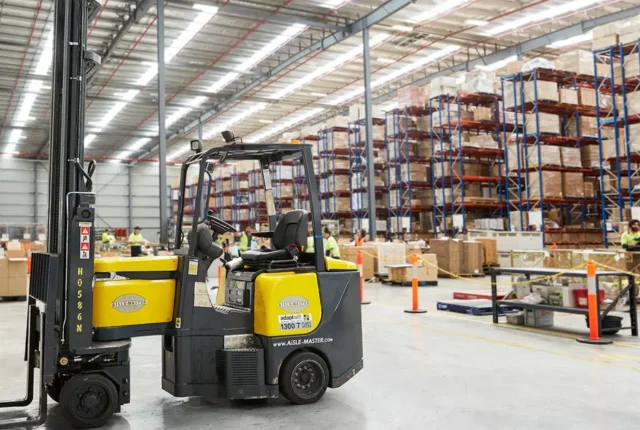
Australia’s Warehousing Capacity: Meeting Rising Demand
Warehousing plays a crucial role in Australia’s supply chain, acting as the ba

Why End-to-End Supply Chain Visibility Has Become a Competitive Advantage
Australian businesses are no longer treating freight visibility as a “nice to
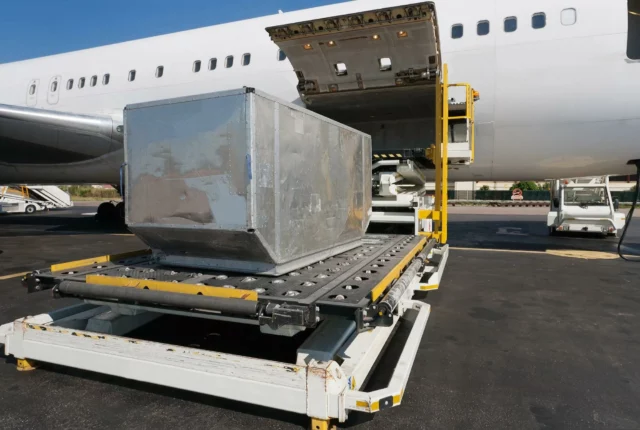
Why 4PL Is Gaining Ground in Australia’s E‑Commerce Era
E-commerce in Australia has reached new heights, with online retail sales climbi
