




Full Truckload Freight Explained: What You Need to Know
Full Truckload Freight Explained: What You Need to Know is no longer a niche topic for transport managers; it is a strategic lever for supply chain resilience. In Australia, where long distances and regional dependencies shape every freight decision, understanding full truckload freight is essential to designing robust freight transportation services. Senior leaders need to view FTL not just as a cost line, but as an asset that can stabilise service performance, mitigate risk and support growth across complex national networks.
When treated as a network design decision rather than a spot booking, full truckload freight becomes a controllable driver of service, cost and risk outcomes.
At its core, FTL is a dedicated truck moving a single customer’s freight from origin to destination with minimal handling and no cross-docking. That simplicity is precisely why Road Freight in Australia relies on it for fast, predictable flows between capital cities, ports, regional hubs and industrial precincts. Compared with shared-load models, FTL offers tighter control over ETAs, chain-of-responsibility compliance and product integrity, especially for high-value, fragile or time-critical freight where service failures quickly erode margin.
Understanding Full Truckload Freight in a Changing Market
What has changed is the operating context around full truckload freight. Heavy vehicle technology, real-time visibility and AI-based planning tools are reshaping how shippers plan full truckload shipping options and domestic freight transport services. Telematics data now exposes underutilised capacity, dwell time and service variability in ways that were invisible a decade ago. The leaders using these insights well are redesigning their logistics and shipping solutions, rebalancing when they choose FTL versus LTL across lane pairs, customer segments and inventory strategies.
Strategic Choices, Risks and Opportunities for Australian Shippers
Too often, the FTL versus LTL debate is framed purely as a rate comparison, which misses the bigger strategic question: what level of control do you need on a lane, and what is the cost of failure? For lanes with volatile demand, LTL and other cargo delivery options will remain essential. However, on repeat corridors with stable volumes, shifting to planned FTL can actually reduce total cost by cutting handling, claims, delays and exception management effort. This is particularly true for interstate cargo delivery choices where missed windows can disrupt production or retail promotions.
To unlock that value, executives should start with data, not anecdotes. Map your australian road freight services by corridor, frequency, cube and weight, then overlay service performance and cost-to-serve. Look for patterns where multi-stop FTL, backhauls or door-to-door cargo delivery could lift reliability without inflating spend. Cross-functional collaboration matters here: procurement, network planning and operations need a shared view of business freight transport solutions and road freight logistics solutions, instead of treating transport as an isolated tactical purchase.
For broader context on freight trends, the Australian Government’s freight statistics and forecasts provide valuable, non-commercial benchmarks to stress-test your assumptions. Combining this external view with internal shipment data enables more confident decisions about commercial logistics and freight options, particularly for long-horizon contracts. Now is the right moment to review your network, identify two or three lanes where FTL could lift service and stabilise cost, and engage your transport partners to validate the opportunity and design a practical roadmap.

Related posts
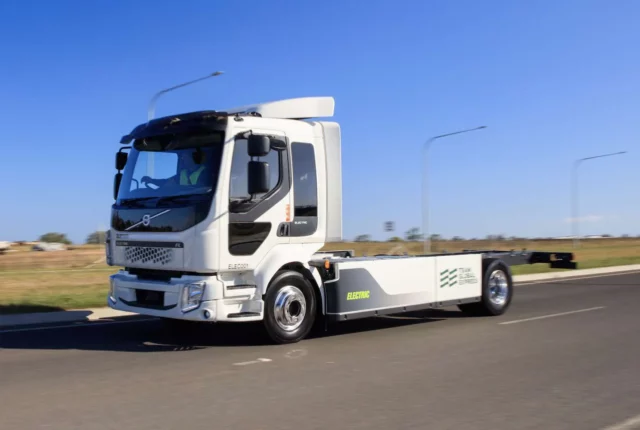
Electric Trucks Hit the Outback: How Road Freight Is Transforming with EV Adoption in Australia
Australia’s road freight sector plays a huge role in keeping everything from s

Maximizing Efficiency in Road Freight: Strategies for Streamlined Operations
In the fast-paced world of logistics and transportation, maximizing efficiency i
The Impact of Regulatory Changes on Australia’s Road Freight Industry
Australia’s road freight industry is undergoing significant transformation
