




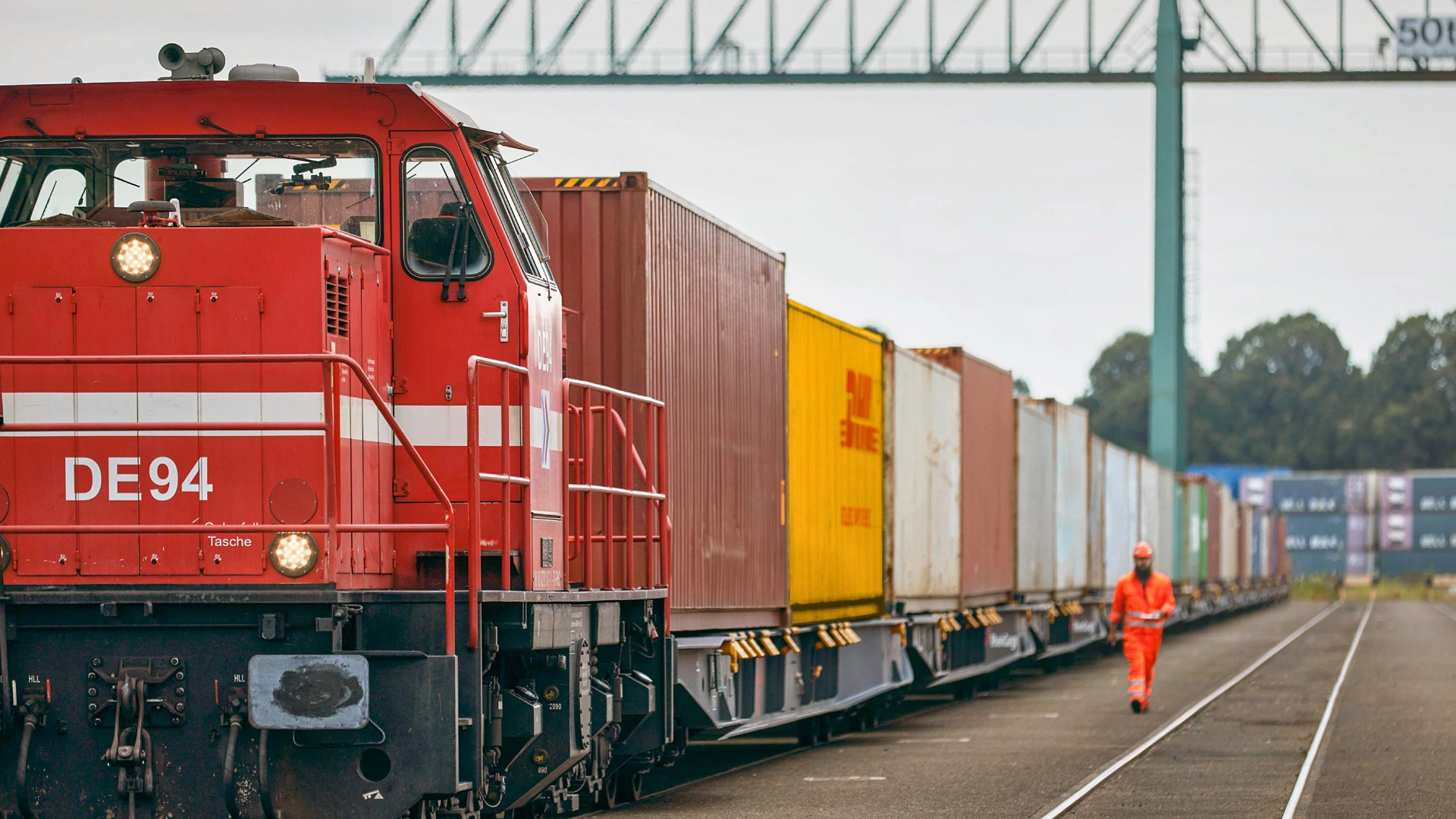
Can Rail Solve Australia’s Freight Capacity Problem? The Growing Shift from Road to Rail
Australia’s freight network is under pressure. Population growth, port activity, e-commerce demand, regional production, driver shortages, fuel volatility, and highway congestion are all testing the limits of road-based transport. For many businesses, the question is no longer whether trucks are useful. They are. The sharper question is whether every long-haul freight task should remain on the road.
Why Australia’s Freight Capacity Problem Is Growing
Australia’s freight task is expanding at the same time that businesses are demanding faster, cheaper, and more reliable movement of goods. The country’s geography makes the challenge more difficult. Freight often needs to move across long distances between ports, farms, mines, warehouses, manufacturing sites, and capital city distribution centres.
Road freight has traditionally carried much of this pressure because it is flexible. Trucks can go almost anywhere, operate on many schedules, and support door-to-door delivery. But flexibility does not automatically mean infinite capacity. Highways have limits. Drivers have limits. Fuel costs move sharply. Urban congestion slows freight access around ports and industrial precincts. Heavy vehicle traffic also contributes to road maintenance costs and safety risks.
This is why the discussion around Road freight to rail freight is gaining attention. Rail offers a different kind of capacity. A single freight train can move large volumes that would otherwise require many trucks. For businesses shipping containerised freight, bulk commodities, building materials, agricultural goods, or recurring interstate loads, rail can help absorb long-haul demand without putting every tonne on the highway.
The key is understanding where rail fits. It is not a universal replacement for road freight. It is a stronger option where freight volumes are predictable, routes align with rail corridors, and the delivery model does not depend heavily on individual last-mile drops.
Road Freight Still Matters, But Its Role Is Changing
Road freight remains the most flexible mode in Australia’s domestic freight system. For short-haul, regional deliveries, urgent loads, mixed consignments, construction sites, retail outlets, and customer-specific delivery points, trucks are difficult to replace. Their strength is direct access.
However, road freight becomes more exposed when the task shifts from local delivery to long-distance linehaul. Over longer corridors, the cost of fuel, labour, tolls, maintenance, driver availability, vehicle utilisation, and delays can become more significant. This is where rail freight alternatives to road transport become commercially relevant.
For Australian business owners, the issue is not whether road freight is “bad.” It is whether road is being used for freight tasks that rail could handle more efficiently. If freight is moving from one depot to another, from a port to an inland terminal, or between major capital city logistics hubs, rail may offer a more scalable option.
The shift from road freight to rail freight is also about risk management. Relying heavily on one mode can expose a supply chain to road disruptions, fuel price spikes, labour shortages, and congestion. A diversified freight strategy gives businesses more options when capacity tightens.
In practical terms, trucks will still play a role. But for businesses that do not require last-mile delivery, rail should be part of the freight planning conversation much earlier.
Where Rail Freight Has the Strongest Business Case
Rail freight works best when volume, distance, and consistency align. It is particularly useful for long-haul freight by rail, interstate movements, containerised rail freight, bulk freight, and recurring consignments that can be planned around terminal schedules.
The strongest use cases include:
- Port-to-terminal container movements
- Interstate depot-to-depot freight
- Agricultural freight moving from regional production areas
- Industrial and construction materials
- Mining and resource-related freight
- Large-volume retail or wholesale inventory transfers
- Non-urgent freight with predictable dispatch windows
For example, a business moving full containers between Melbourne and Brisbane, Sydney and Perth, or Adelaide and Darwin may not need a truck to complete the entire journey. If the freight can be consolidated, loaded through an intermodal terminal, and collected at the destination hub, rail may reduce exposure to long-haul road constraints.
This is the core opportunity behind discussions. Rail is not always faster. It is not always simpler. But it can be better suited to large, repeatable, long-distance freight flows where capacity and cost control matter more than same-day flexibility.
For businesses that do not need last-mile services, rail can be especially attractive because one of rail’s common disadvantages — the need for road pickup and delivery — becomes less relevant.
Intermodal Terminals Are the Missing Link
The success of Australia’s rail freight shift depends heavily on intermodal terminals. These facilities connect rail lines with ports, roads, warehousing, container parks, and distribution networks. Without strong terminals, rail can struggle to compete with the convenience of road freight.
Intermodal rail freight Australia is built around this connection. Freight may arrive by truck from a warehouse, transfer to rail for the long-haul leg, then move from the destination terminal to another depot, port, or logistics hub. For businesses that already operate near terminals, or can consolidate freight through them, rail becomes far more practical.
This is why projects such as Inland Rail, port rail upgrades, and intermodal precincts matter. They are not just rail projects. They are freight capacity projects. Their goal is to make it easier to move large volumes across long distances without relying entirely on heavy vehicles.
Inland Rail and the Capacity Debate
Inland Rail has become one of the clearest examples of Australia’s rail freight ambitions. The project is designed to improve freight movement between Melbourne and Brisbane through an inland route, connecting regional production areas with major markets and ports.
For businesses, the significance is not just the track itself. It is the broader promise of improved freight capacity, shorter rail transit options on key corridors, and better access for regional exporters and domestic supply chains. Inland Rail has also been promoted as a way to remove heavy vehicle movements from roads and support more efficient long-haul freight.
However, the project also shows that rail freight expansion is not simple. Cost, delivery timelines, route decisions, community concerns, terminal access, and policy changes all affect how quickly benefits reach the market. Rail infrastructure requires long-term planning, and businesses cannot treat it as an overnight solution.
Still, the direction is important. Australia’s freight task is growing, and road freight alone cannot absorb every future capacity requirement without consequences. Even where rail projects face delays or revisions, the underlying need for more efficient long-haul freight remains.
Cost, Reliability, and Timing: What Businesses Need to Compare
The rail freight vs road freight costs question is more complex than a simple rate comparison. A road quote may appear easier because it often includes direct pickup and delivery. A rail quote may involve terminal handling, container positioning, storage, transfer costs, and schedule planning.
To compare fairly, businesses should calculate the full freight task:
- Origin handling
- Terminal access
- Linehaul cost
- Destination handling
- Storage or demurrage risk
- Transit time
- Delivery window reliability
- Damage risk
- Carbon impact
- Volume scalability
Rail may be more cost-effective for larger, heavier, or recurring loads. Road may remain better for smaller, urgent, or highly variable freight. The real advantage comes from matching the mode to the task rather than forcing all freight into one channel.
When Rail Is Not the Right Answer
Rail freight is powerful, but it is not suitable for every shipment. Businesses should be cautious when freight is highly urgent, low-volume, irregular, fragile, difficult to consolidate, or far from a practical rail terminal.
Rail may also be less suitable when:
- Delivery requires multiple customer drops
- Freight must arrive within a narrow same-day window
- The origin or destination is remote from rail access
- Handling costs outweigh linehaul savings
- Volumes are too small to justify terminal movement
- The route is not well served by rail operators
This matters because some businesses approach rail expecting it to behave like road freight. It does not. Rail works best as a planned linehaul solution. It rewards volume, consistency, and coordination. It is less effective when used as a direct substitute for highly flexible trucking.
A practical freight strategy recognises that road and rail are complements, not enemies. Trucks are still needed for access, short-haul movement, urgent deliveries, and last-mile services. Rail is strongest when it carries the heavy long-distance burden.
For Australian business owners who do not need last-mile delivery, the opportunity is to remove unnecessary long-haul road legs from the supply chain. That is where Road freight to rail freight can create real value.
How Business Owners Can Start Shifting Freight from Road to Rail
A successful rail transition starts with freight data. Businesses should review shipment history, route patterns, weight, volume, delivery deadlines, origin and destination points, and seasonal peaks. The goal is to identify freight lanes where rail can compete.
A useful process includes:
- Map Your Long-Haul Freight Lanes
Look for recurring movements between major cities, ports, inland hubs, or distribution centres. These are usually the best candidates for interstate rail freight Australia.
- Separate Urgent Freight from Planned Freight
Not every shipment needs the fastest mode. Planned inventory transfers, bulk stock replenishment, and containerised freight may suit rail better than urgent customer orders.
- Check Terminal Access
Rail becomes more practical when the origin and destination are near intermodal terminals, ports, or logistics precincts.
- Compare Total Cost, Not Just Linehaul
Include handling, storage, transfer, transit time, and reliability in the comparison.
- Trial One Lane First
Instead of shifting an entire network, test rail on one suitable freight corridor. Measure cost, delivery performance, handling quality, and operational impact.
This measured approach helps businesses avoid disruption while exploring the benefits of Road freight to rail freight.
Conclusion
Rail will not solve every freight problem in Australia, but it can help solve a specific and growing one: how to move more goods across long distances without putting every load on already pressured roads. For businesses that rely on long-haul transport but do not require last-mile delivery, rail freight deserves serious consideration.
FAQs
- Is rail freight cheaper than road freight in Australia?
Rail freight can be cheaper for long-distance, high-volume, or heavy freight, especially when cargo moves between major terminals. However, businesses should compare total costs, including handling, terminal access, storage, and transfer fees.
- What freight is best suited for rail in Australia?
Rail is well suited to containerised rail freight, bulk commodities, agricultural goods, construction materials, industrial freight, and recurring interstate freight. It works best when volumes are predictable and delivery is not highly time-sensitive.
- Can rail replace road freight completely?
No. Road freight remains essential for pickup, delivery, regional access, urgent shipments, and last-mile logistics. The most effective model is often road and rail working together, with rail handling the long-haul leg.

Related posts
Container xChange Predicts Container Price Bubble Will Burst in H2 2024
Container xChange, a leading player in the global container shipping market, rel

Speed and Security: The Advantages of Air Freight Shipping
In the world of logistics and supply chain management, two key factors reign sup

Import Delays? Understanding Air Freight Surcharge Trends Impacting Aussie Retailers
Australia’s supply chains are under pressure in 2026 as air freight prices and
