




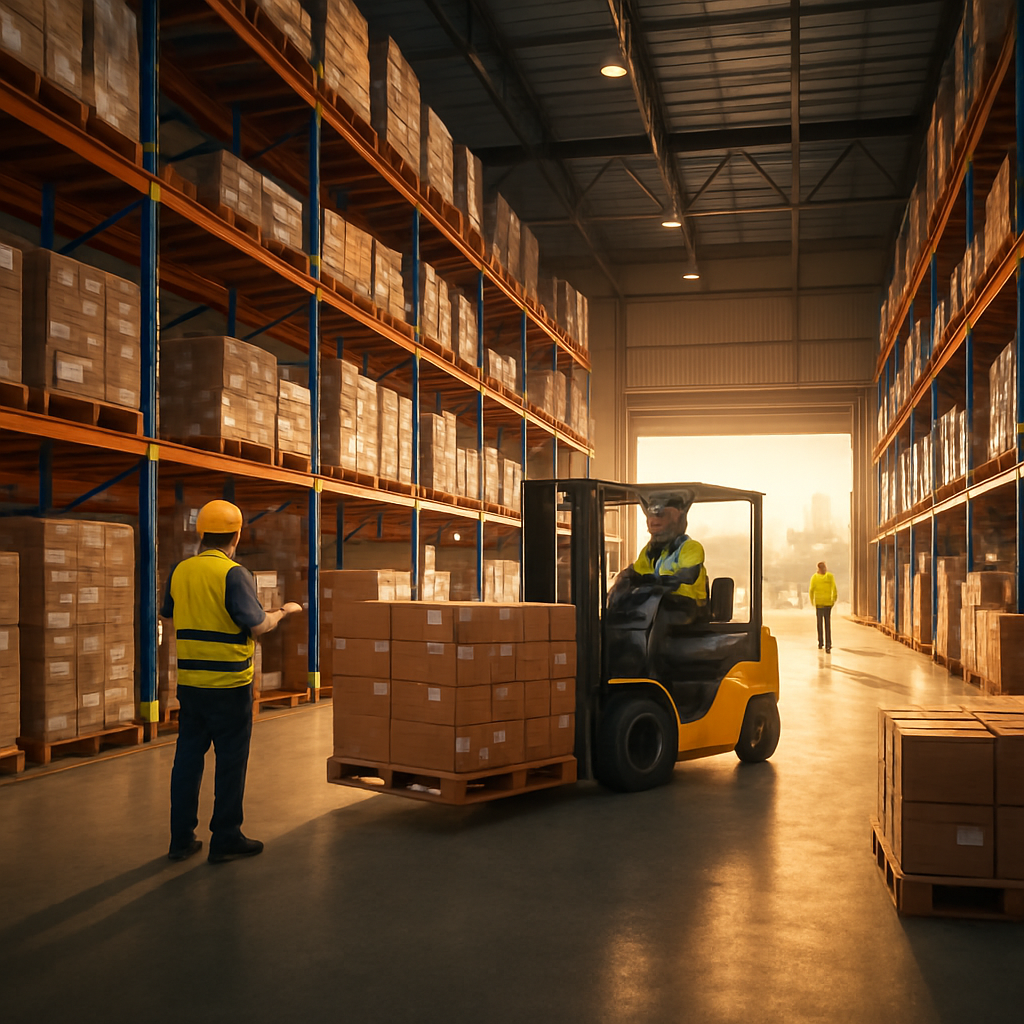
Distribution Centre Solutions: Optimising Your Supply Chain
Distribution Centre Solutions: Optimising Your Supply Chain in Australia
6 Ways Distribution Centre Solutions Optimise Your Supply Chain
In a market where industrial vacancy hovers near record lows, Australian businesses are being forced to move more product through less space. Modern distribution centre solutions are now central to supply chain performance, helping operators protect service while containing costs. From sharper network design to smarter automation, the focus has shifted to squeezing every possible gain from limited footprints. For leaders juggling service promises, rising costs and labour constraints, the challenge is identifying which levers will deliver the fastest, most sustainable impact.
1. Align DC Design with Network Strategy
High-performing networks start with clear visibility of where customers are, how demand shifts and which ports, rail links and freight corridors matter most. Many Australian retailers now balance mega DCs with smaller regional facilities to trim delivery times and freight costs. This approach underpins end-to-end logistics planning, ensuring every site plays a defined role in meeting service and cost targets. The right footprint makes it easier to refine inventory storage options and respond quickly when demand or transport conditions change.
2. Automate for Throughput and Resilience
With labour markets tight and volumes volatile, automation is moving from optional to essential in large sheds and smaller operations alike. Technologies such as goods-to-person systems, conveyor sortation and autonomous mobile robots are being used to increase distribution centre efficiency improvements without a complete rebuild. Coles’ automated facilities in Sydney illustrate how high-throughput systems can process millions of cartons per week while reducing manual handling. Even targeted investments in voice picking or smart packing can transform productivity and safety outcomes.
3. Use Data to Orchestrate Inventory
As omnichannel models expand, operators are leaning on advanced warehouse management and analytics to tame complexity. Real-time visibility over inbound, storage and dispatch helps improve supply chain efficiency and cut costly buffers. Australian businesses are increasingly integrating WMS, transport and order platforms to fine-tune warehouse inventory storage strategies and reduce capital tied up in slow-moving stock. For deeper technical context on data-led logistics, industry reports from the Department of Infrastructure, Transport, Regional Development, Communications and the Arts provide useful benchmarks at https://www.infrastructure.gov.au/.
4. Build Flexibility for Peaks and Disruptions
Bushfires, floods, industrial action and erratic consumer demand continue to test even the best-run networks. Operators are responding with flexible warehouse storage options, multi-user facilities and alternative routing plans to keep freight moving. Within the four walls, layouts that allow rapid re-slotting, such as converting reserve aisles into fast-pick zones, make it easier to absorb spikes without blowing out delivery times. These strategies support optimising warehouse logistics while protecting OTIF performance during Black Friday, Christmas or unexpected surges.
5. Embed Sustainability into DC Operations
With emissions under scrutiny, organisations are designing greener sites that also trim operating costs. Solar generation, LED lighting, rainwater harvesting and energy-efficient materials handling are now common in new builds and major refurbishments. Locating facilities closer to intermodal hubs supports integrated logistics and warehousing, cutting heavy vehicle kilometres and fuel burn. For operators pursuing formal supply chain optimisation services, sustainability credentials are increasingly a factor in winning contracts, especially with retail and government clients.
6. Partner with 3PL Specialists for Scale
In a tight property and capital environment, many businesses are turning to specialist 3PLs to access advanced facilities and logistics management solutions without major upfront spend. Expert partners can model future demand scenarios, improve distribution centre solutions, and advise on inventory control and logistics support as networks evolve. Outsourced Warehousing in Australia also gives growing brands access to scalable space and technology, without locking in long leases or large automation bets. The result is more agile capacity and lower risk as markets and channels shift.
- Clarify your current and future inventory profile to right-size sites and storage.
- Assess which automation options deliver the strongest business case over five years.
- Benchmark your DC performance against peers for cost, service and safety.
- Identify quick wins for distribution centre efficiency improvements across existing sites.
- Develop a staged roadmap that links network design to practical warehouse upgrades.
To pressure-test your current network and explore tailored distribution centre solutions for your business, book a consultation with a supply chain specialist today and start building a more resilient, efficient and scalable Australian logistics network.

Related posts

Short-Term vs Long-Term Storage: Choosing the Right Option
Compare short-term vs long-term storage in Australia, from self-storage to wareh

Understanding Australian Warehousing Services: A 2026 Guide
Explore how Warehousing in Australia is evolving in 2026, from 3PL integration t

Pick and Pack Fulfilment: Boosting Ecommerce Efficiency
Discover how expert pick and pack fulfilment and Warehousing in Australia stream
